
San Clemente Real Estate Appraiser — Forster Ranch
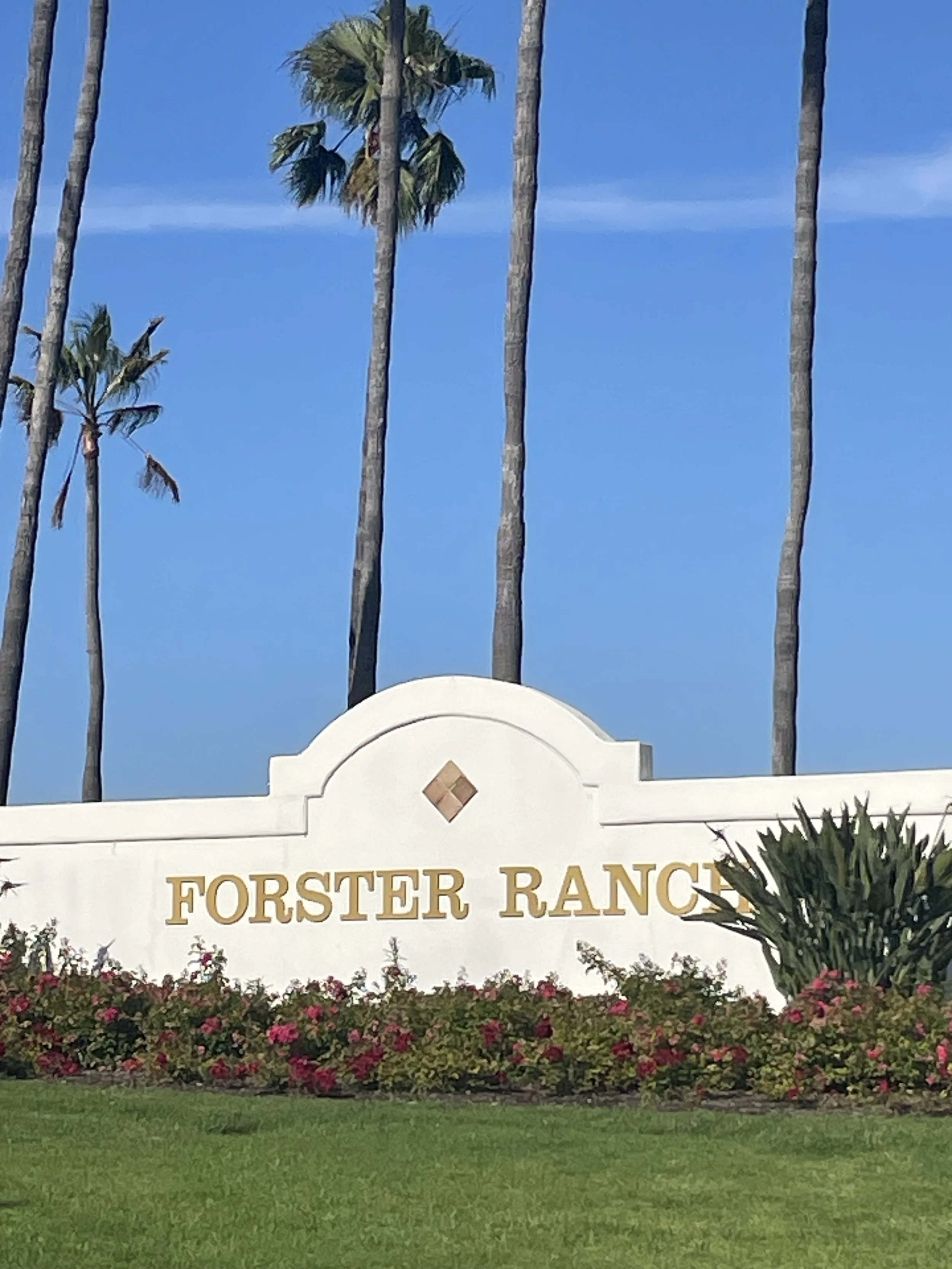
Forster Ranch Entrance
Forster Ranch, San Clemente: The Story of a Neighborhood
If you stand on the ridgeline above Forster Ranch and look west, you understand the place in a single glance: rolling hills and open canyons stepping down toward the Pacific, rooftops tucked into the folds, and the ocean glittering a couple of miles past the freeway. This is San Clemente's "country coastal" side — east of Interstate 5, set among more than a thousand acres of hills and open space, and one of the largest communities in the city.
I'm a Certified Residential Appraiser who works throughout this neighborhood, and Forster Ranch is one of the more interesting places in South Orange County to study, precisely because no two pockets of it are quite the same. To understand why, it helps to start with the name on the gate.
How Forster Ranch Was Built
Forster Ranch took shape as a master-planned community beginning in the early-to-mid 1980s and continued to fill in through the early 2000s, with some of the newest homes completed as late as 2009. Because it was built out over nearly three decades, the neighborhood is really a timeline you can drive through — and that history is written into the homes and the lots themselves.
One of the most distinctive things about the older parts of Forster Ranch is something buyers notice immediately: smaller homes sitting on unusually large, generously spaced lots. In the earliest tracts — areas like Rim Rock and the Tocayo neighborhoods — you'll find single-family homes around 1,500 square feet on parcels that can run 10,000 square feet or more. That ratio is rare in a coastal city, and it's a big part of why Forster Ranch became known for two things you almost never see closer to the beach: room to breathe, and RV parking.
As the story goes locally, those early lots were originally graded for larger, estate-style homes — but when the original plans for grander construction fell through, builders ended up placing more modest houses on parcels that had already been carved out at estate scale. Whether or not every detail of that account holds, the result on the ground is unmistakable: a first generation of right-sized homes on oversized land.
The later tracts tell a different story. Newer neighborhoods built around the turn of the millennium — places like Ashton and the gated Reserve communities — brought larger, more proportionate homes, with the Reserve's residences running closer to 3,000 square feet on lots scaled to match. Drive from an early-1980s street to an early-2000s street and you can watch the design philosophy of an entire era change house by house.
The Builder
If you've spent any time driving the hills of Forster Ranch here in San Clemente, you've probably noticed something: this isn't one neighborhood. It's two eras stitched together. There are the older, tighter tracts from the early-to-mid 1980s, and then the newer, larger-lot estate communities that went up around the turn of the millennium. As an appraiser, I read those seams in the landscape all day — different builders, different decades, different lot economics.
What I've been chasing lately is a more specific question: who owned this land before the bulldozers showed up, and did a rock-and-gravel company once have a hand in it?
Here's what I've been able to verify, what I haven't, and why the gaps are as interesting as the facts.
"Conrock" was very real — and very big
Consolidated Rock Products Co. was a Los Angeles–based producer of sand, gravel, and crushed rock that renamed itself Conrock Co. in 1972. It was a serious operator — the kind of aggregate company that controlled large land holdings across Southern California, because rock, sand, and gravel businesses sit on (and mine) a lot of dirt.
In 1984, Conrock merged with California Portland Cement to form CalMat Company, instantly creating one of the largest suppliers of concrete, asphalt, and gravel in California, Arizona, and Nevada. And here's the detail that's relevant to anyone who follows land development: a number of observers at the time viewed that merger as a windfall for California Portland Cement shareholders specifically because it gave them a stake in Conrock's real-estate holdings at well below market value.
That's the part most people miss about old aggregate companies. They weren't just in the rock business — they were quietly sitting on enormous quantities of developable land. CalMat carried a "properties" division forward after the merger, and by 1985 that real-estate arm produced about 20 percent of the company's profit while accounting for only a small slice of revenue. In other words, the dirt was worth more than the rock.
So where does Forster Ranch come in?
The timing and the profile line up almost too neatly. A rock company with major Southern California land holdings, spinning up a real-estate development arm right as Forster Ranch was building out in the early-to-mid 1980s — and a 1984 corporate merger that's exactly the kind of event that produces a "the project changed hands midstream" story. If you wanted to explain why the early Forster Ranch tracts feel like one chapter and the later ones feel like another, "the landowner got absorbed into a bigger company" is a tidy theory.
But I want to be straight with you, because in my business credibility is the whole job: I have not found a source that explicitly names Conrock or CalMat as the Forster Ranch landowner, and I haven't found anything placing a rock or aggregate plant on the Forster Ranch parcel itself. That direct link is still the missing piece. Until a deed, a tract map, or a contemporaneous news account confirms it, the Conrock connection is a well-supported hypothesis — not an established fact. I'd rather tell you that than dress up a guess as history.
Why an appraiser cares about any of this
This isn't just trivia. Land history shows up in value.
The era a tract was platted tells you a lot before you ever walk a property: lot sizes, setbacks, street layout, whether Mello-Roos special assessments apply, the vintage of the original construction, and the kind of buyer the neighborhood was originally designed for. When I'm developing adjustments for a Forster Ranch assignment — estate, divorce, private-fee, or lender work — knowing which "chapter" a home belongs to keeps me from comparing across two fundamentally different products and calling them the same market.
If you own in Forster Ranch and you happen to know who originally subdivided the early-1980s tracts — or you've got an old deed, brochure, or tract map gathering dust in a drawer — I'd genuinely love to see it. That's the last piece of this puzzle.
The Greenbelts, Trails & Open Space
What truly defines daily life in Forster Ranch is everything between the homes. The community was laid out around generous greenbelts and open space, with grassy corridors, walking paths, and hillsides woven through the neighborhoods rather than tacked onto the edges. It's the kind of layout where kids drift between cul-de-sacs and parks on foot, and where the open hills are never more than a short walk away.
Crowning it all is the Forster Ranch Ridgeline Trail, a roughly 3.2-mile natural-surface path that follows the crest of the hills along the south and east of the community. It's mostly surrounded by protected open space, with some genuinely steep stretches and payoff views looking down over the Talega valley to the ocean and, after dark, the city lights. Locals treat it as a backyard amenity.
The neighborhood centerpiece for families is Forster Ranch Community Park — known to nearly every kid in town as "Pirate Park" for its pirate-ship-and-palm-tree playground. Add in neighborhood parks, sport courts, and the open greenbelts, and the outdoor-first character of the place comes through clearly.
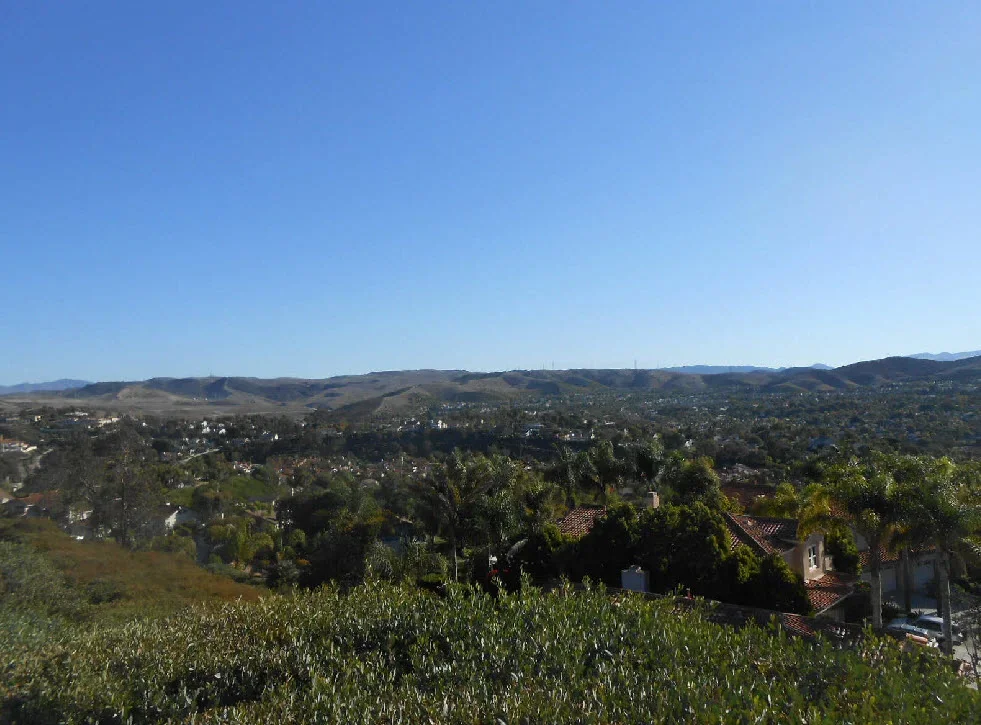
Forster Ranch View
A Neighborhood of Neighborhoods
Part of what makes Forster Ranch feel large is that it's really a collection of around twenty single-family tracts plus a handful of condo and townhome communities, each with its own character. Among the names you'll hear: Rim Rock, the Tocayo neighborhoods, Flora Vista, Ashton, Cantomar, Compass Pointe, El Encanto, Glen Ridge Estates, Las Veradas, Forster Highlands, the luxury Del Cabo townhomes, and the gated Reserve communities (Reserve North, South, East, and West). Tucked into the back hills are even some custom estates that most people never realize are there.
A few practical notes that locals know well: most of Forster Ranch carries no Mello-Roos, the master homeowners association maintains community pools, spas, sport courts, and the walking paths, and the main ways in from the I-5 are Camino de la Estrella onto Camino de los Mares, and Camino Vera Cruz. The community sits right alongside Talega, though the two aren't directly connected by road.
Schools, Beaches & Everyday Life
Forster Ranch sits within the Capistrano Unified School District, with well-regarded schools nearby including Truman Benedict and Marblehead elementary schools, Bernice Ayer and Shorecliffs middle schools, and San Clemente High School.
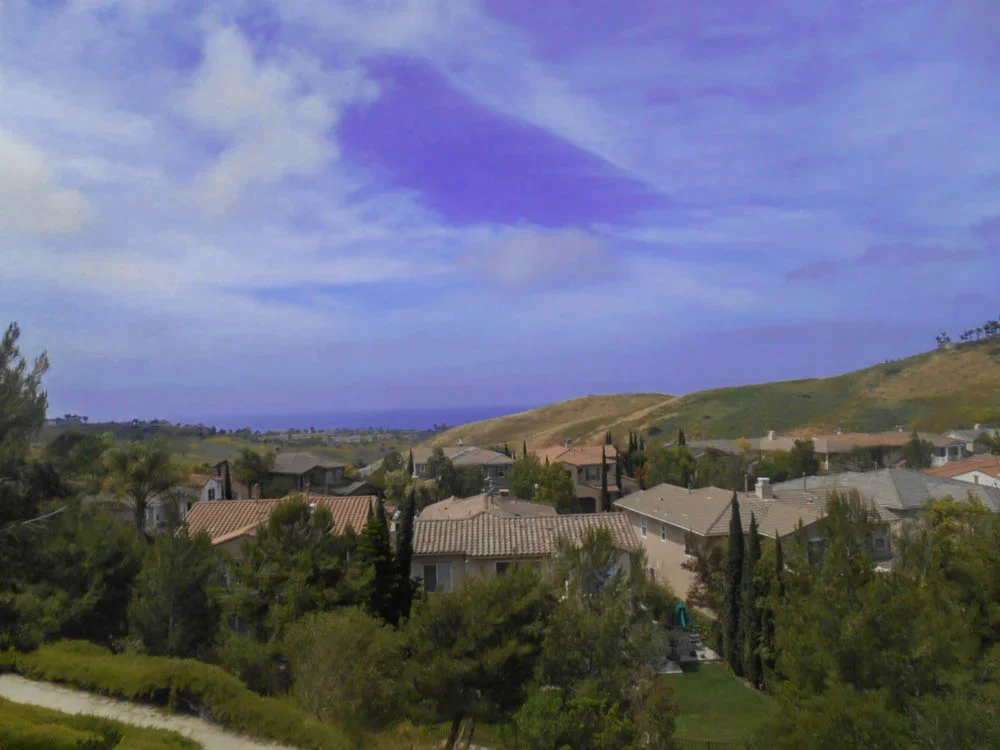
View From The Reserve In Forster Ranch
And for all its hillside calm, the coast is barely two miles down the hill. San Clemente's beaches, the historic pier, downtown's restaurants and shops, the Outlets at San Clemente, and Dana Point are all minutes away. That balance — a quiet, green, family-centered hilltop with the ocean within easy reach — is the whole appeal, and it's held up for forty years.
A Note on Home Values in Forster Ranch
Because Forster Ranch spans so many eras, lot configurations, view orientations, and tract types, it's a neighborhood where home values genuinely vary block to block — and where a thoughtful, locally informed opinion of value matters. The same square footage can mean very different things depending on the age of the home, the usable land around it, and whether it captures an ocean, canyon, or hillside view.
As a Certified Residential Appraiser (and licensed California real estate agent) who works throughout Forster Ranch and coastal Orange County, I provide independent appraisals for estate and date-of-death matters, divorce and litigation, pre-listing and pre-purchase decisions, and private needs. If you own a home here and need a credible, defensible value — for any reason — I'd be glad to help.
Just Appraisals, Inc. provides independent, USPAP-compliant residential appraisals across coastal Orange County, including San Clemente, Dana Point, Laguna Beach, and San Juan Capistrano. We specialize in date-of-death and estate valuations, divorce and litigation appraisals, and private-fee assignments for attorneys, agents, and homeowners.
Need a credible value — current or retrospective — on a North Beach or South County property? Get in touch.